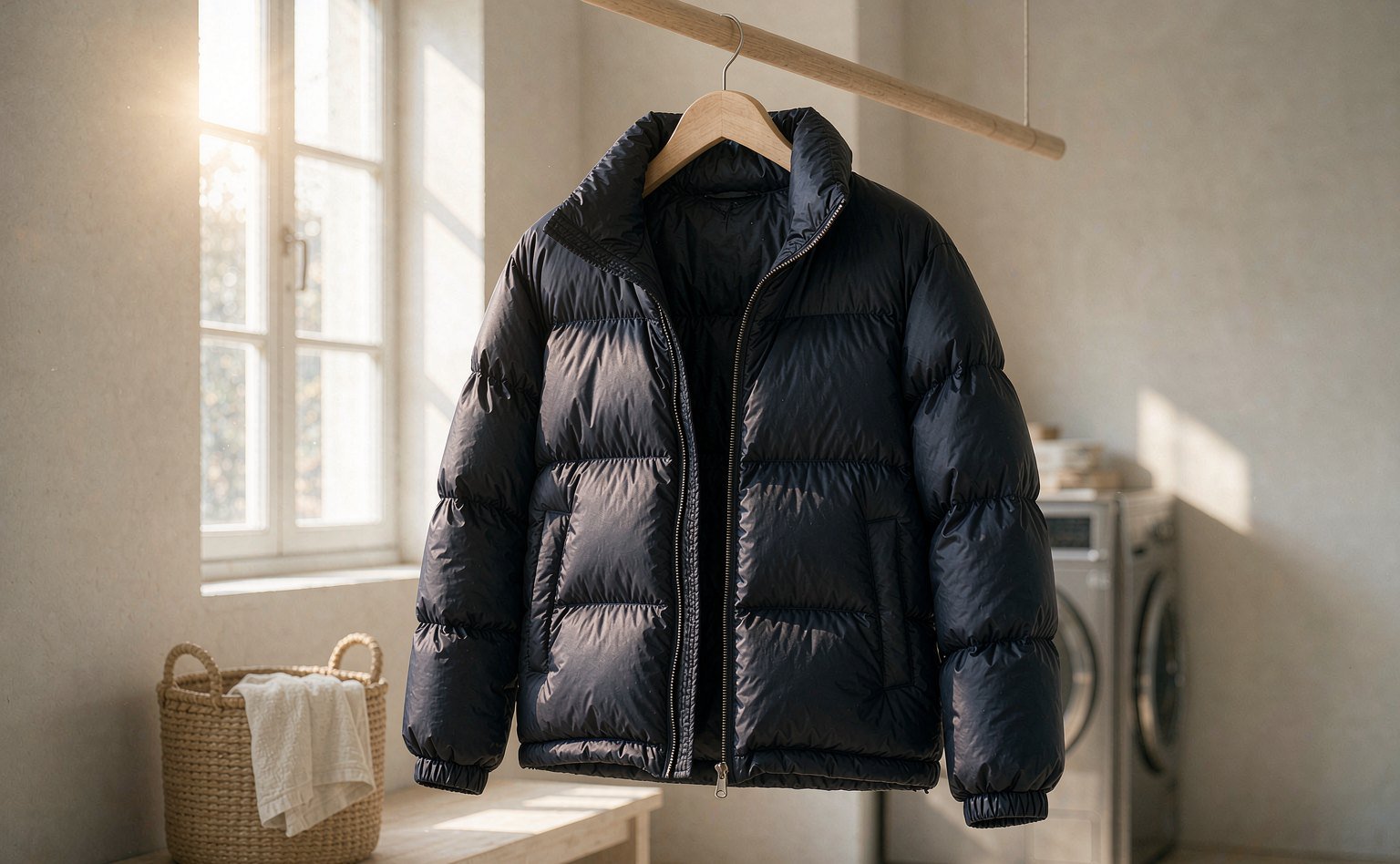
Wash it rarely, wash it cold, dry it slow, and never store it compressed. That is the whole routine in one sentence, and it answers most replica burberry burberry care questions before they start. Puffer damage comes from over-washing and high heat far more often than from wear. This guide gives you the exact temperatures, detergent choices, drying moves and storage habits that keep a quilted down jacket lofting for years — plus fixes for the problems that do show up.
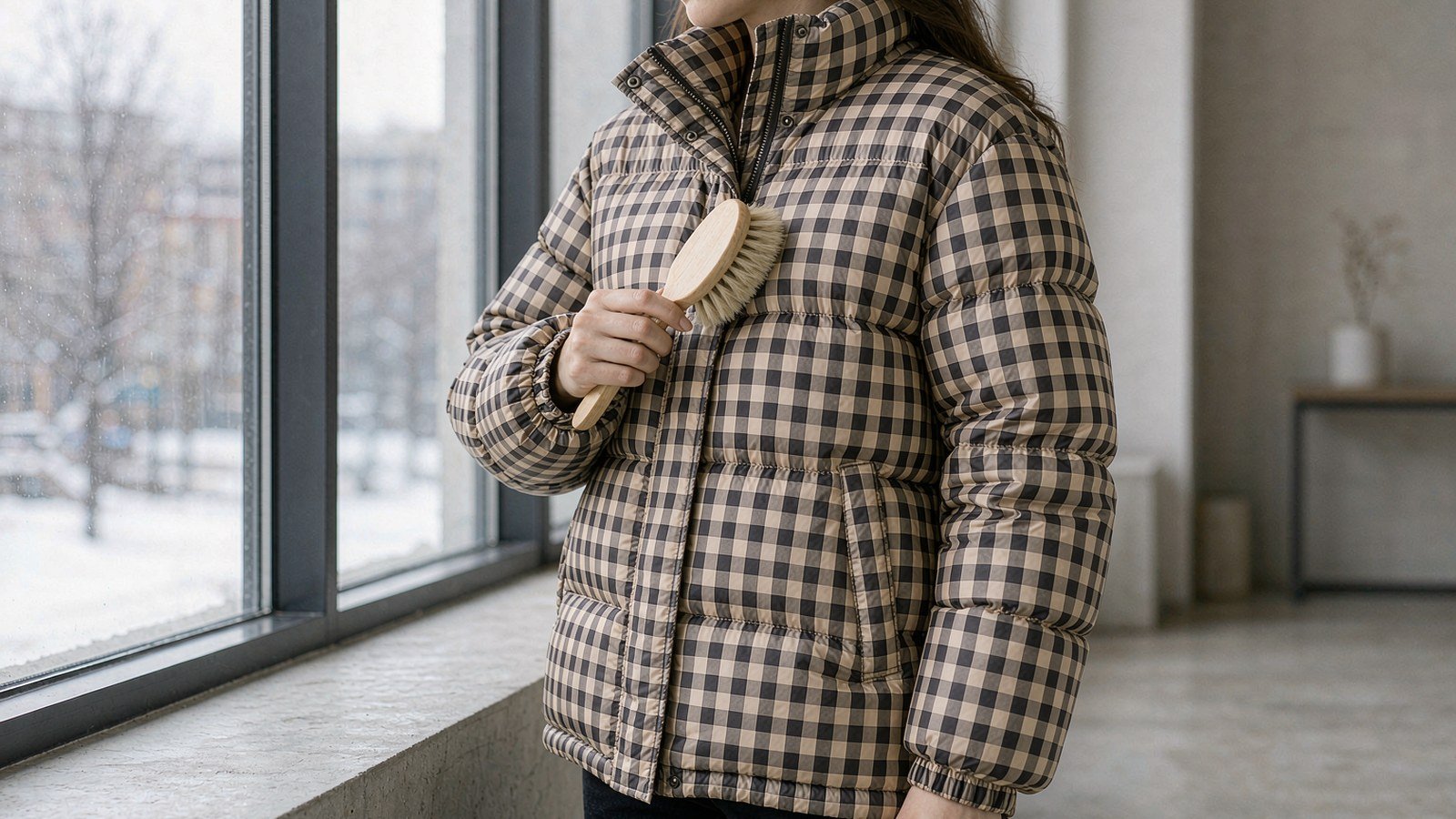
Why a Quilted Down Puffer Needs Its Own Routine
Three design features make this jacket unforgiving. The nylon shell is thin and heat-sensitive, so a hot cycle or a hot dryer can warp it and dull the finish. The quilted baffles box the down into separate compartments, so fill that clumps in one box stays clumped — water is what makes the clusters stick together in the first place. And down itself relies on loft: it insulates by trapping air, which means anything that mats the fill removes the warmth you paid for.
The good news: once you know the failure points, the routine stays simple.
Washing: Temperature, Detergent and Machine Settings
First, ask whether the jacket needs a wash at all. Most down jackets go a full season on spot-cleaning alone. Brush off dried dirt, wipe the collar and cuffs with a damp cloth and a drop of mild soap, and you have avoided the wash cycle entirely.
When a full wash is unavoidable, run it this way:
- Close all zippers and snaps, empty the pockets, and turn the jacket inside out
- Use a front-loading machine on cold — below 30°C — on the gentle or delicate cycle
- Use a down-specific detergent at half the usual dose; never fabric softener
- Add an extra rinse so no soap residue is left behind
- Skip the spin-heavy settings; a gentle spin is enough
| Do | Don’t | Why |
|---|---|---|
| Zip up and turn inside out | Wash with hardware exposed | Open zippers abrade the nylon shell |
| Cold water below 30°C | Warm or hot cycles | Heat can warp the shell and set stains |
| Down detergent, half dose | Regular detergent or softener | Softener coats the fill and kills loft |
| Run an extra rinse | Skip the rinse step | Soap residue mats clusters together |
| Front-loader, gentle cycle | Top-loader with an agitator | Agitators tear seams and baffles |
Drying and Re-Lofting Without Clumps
Drying is where most jackets die. High heat melts shell coatings and permanently fuses down clusters, so set the dryer to no heat and plan on a long cycle. Toss in two or three clean tennis balls or wool dryer balls; they knock the clumps apart as the jacket tumbles.
Check the jacket every half hour. Pull it out, break up any clumps you can feel between your fingers, and return it. Expect two to three hours on no heat. If you air-dry instead, lay the jacket flat on a drying rack away from radiators and direct sun, and turn it every hour. The jacket is done only when the fill feels even and no section stays flat — a damp core will sour within a day.
Storing It for the Off-Season
Down wants to loft, so compression is the enemy of storage. Hang the jacket on a broad hanger in a dry, ventilated closet, or fold it loosely in a breathable cotton bag. Never vacuum-seal it and never bury it in a sealed plastic bin — trapped humidity is how down develops a permanent musty smell. Make sure it is completely dry before it goes away for the summer; storage dampness does more damage in three months than a year of wearing.
Fixing Common Problems
Down leaking through the shell. A feather poking out should be pushed back inside from the other side, not yanked — pulling widens the hole. Persistent leaking at one seam means a stitch failed; seam tape fixes it.
An oily spot or stain. Dab diluted dish soap onto the spot, work it in with a soft brush, and rinse with a damp cloth. Do this before the next full wash so the stain does not set.
Shiny collar and cuffs. That shine is compressed fill and worn finish, not dirt. Brushing after each wear slows it down, but real repair is a professional job.
A stuck zipper. Rub pencil graphite along the teeth and work the slider gently. Never force it — a torn placket is a tailor job.
Lingering odor. Repeat the drying step, not the washing step. Odor after a wash almost always means the core was still damp.
What Not to Do
The list is short and unforgiving. Do not dry clean — solvents strip the natural oils in down and leave the fill brittle. Do not use fabric softener, which coats clusters exactly like the oils you were trying to protect. Do not tumble hot, ever, and do not iron the shell. Do not wash after every wear; if the jacket is not visibly dirty, air it out by a window instead. And keep it off the radiator — concentrated heat scorches the facing side long before the middle is dry.
When to Repair and When to Replace
Repair makes sense for a failed zipper, a torn baffle, or leaking seams — cheap, local fixes. Replace when the fill has lost loft across whole panels, when the shell has gone shiny and thin at the shoulders, or when odor survives a proper wash and dry. No detergent brings loft back.
If you are replacing, sizing is worth ten minutes of thought. Our North Face puffer sizing walkthrough walks through measuring a jacket that already fits you — the fastest way to order right the second time.
 Burberry – Quilted Nylon Down Hooded Jacket Black$228View product
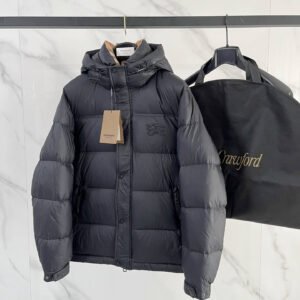 Burberry “Lockwell” Hooded Check Puffer Jacket – Beige & Black$228View product
 Burberry Beige Hooded Puffer Jacket$228View product
Three Burberry puffer options if you are shopping for a replacement.
If the signs point to a new jacket, our replica Burberry burberry buying guide covers what to check before you order — quilting, shell finish, and the details that separate a good batch from a lazy one. These pieces run around $228, comfortably under $250. Browse the full Burberry down jackets range to compare quilted and check-pattern options.
The Replica Burberry Burberry Care Checklist
Run through this once a season and the jacket will outlast your interest in it: spot-clean instead of washing whenever you can, wash cold below 30°C with down detergent and an extra rinse, dry on no heat with dryer balls until the fill is even, and store it hanging and uncompressed in a dry closet. That is the entire replica burberry burberry care routine — four habits, none of them expensive, all of them forgiving if you slip once. The jacket forgives lapses; it does not forgive heat.
FAQ
Can I machine wash a down puffer at home?
Yes, if you have a front-loader. Cold water, gentle cycle, down-specific detergent, zippers closed and jacket inside out. If your only machine is a top-loader with an agitator, hand-wash in a bathtub instead — the agitator will tear the baffles.
How often should I wash a down jacket?
Once a season is plenty for most wearers. Spot-clean collars and cuffs as needed, and air the jacket out after smoky or damp days. Every unnecessary wash cycle costs a little loft.
What if the down clumps after washing?
Dry it longer, not hotter. Tumble on no heat with tennis balls, stopping every half hour to break up clumps by hand. If clumps survive a fully dry jacket, the fill was fused by heat or soap — that damage does not reverse.
Can I dry clean a down jacket?
No. Dry-cleaning solvents strip the natural oils in down, leaving the fill brittle and low-lofting. The consistent advice from down specialists: machine wash cold or hand-wash, and skip the solvent entirely.
How do I store it in summer?
Hang it on a broad hanger in a dry, ventilated closet, or fold it loosely into a breathable cotton bag. Keep it out of vacuum bags and sealed plastic, and make sure it is bone dry before it goes away.
Why does my puffer smell after washing?
Almost certainly it never dried all the way through. The shell dries hours before the core, and a damp core sours quickly. Re-dry on no heat with dryer balls and check the thickest panels by feel.
Can I fix a small tear myself?
Usually, yes. Washable nylon repair tape or an iron-on patch sized slightly larger than the tear holds well on quilted shells. Apply it to a clean, dry shell and round the corners so it does not peel.