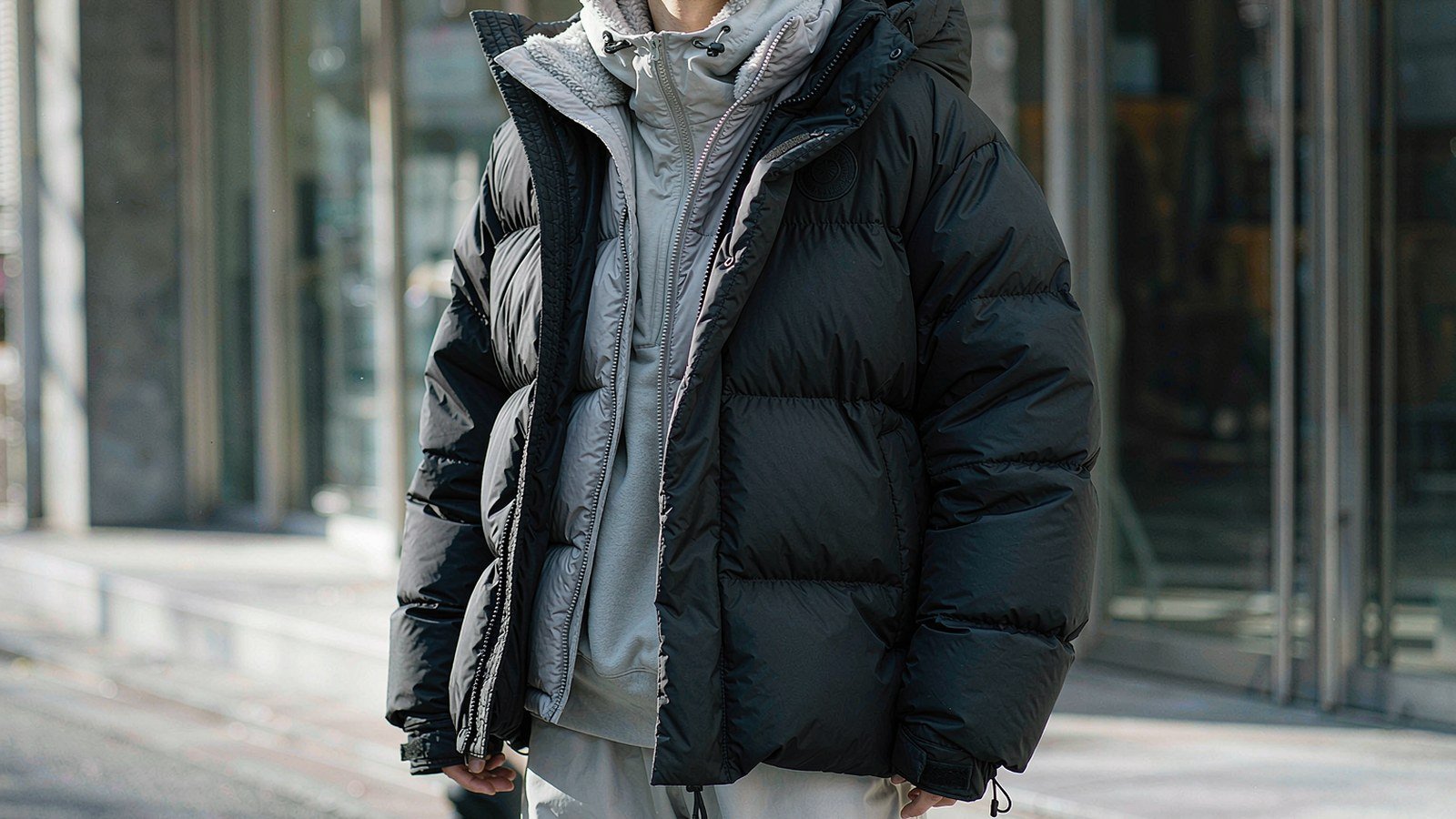
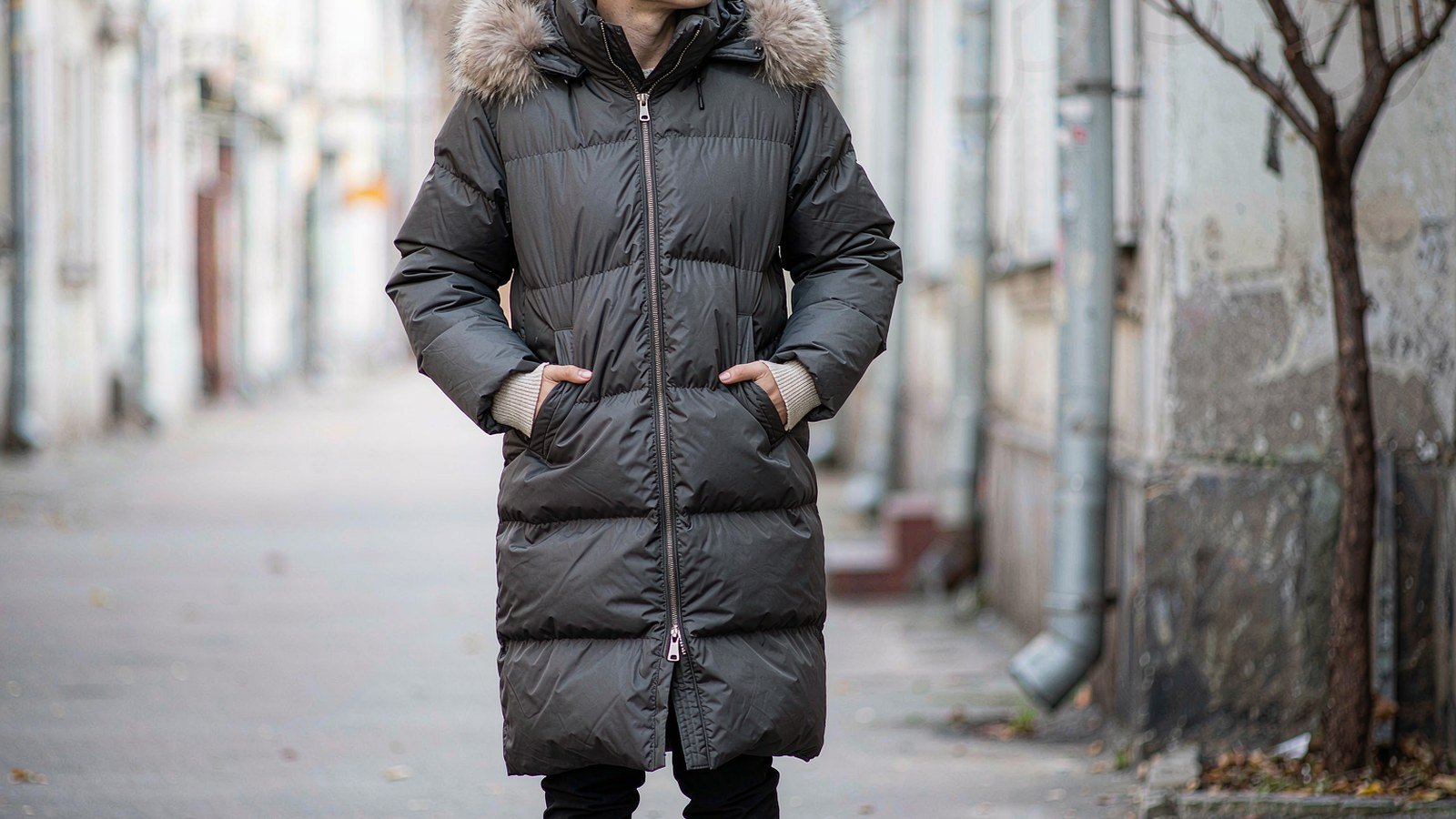
If you normally wear a medium in Canada Goose puffer jackets, order a medium in the vest — the sizing logic carries over, and most people need no change. This replica Canada Goose puffer jacket size chart guide translates the fit of the Langford, Expedition, Wyndham, Chateau, MacMillan, and Crofton down to the sleeveless versions, shows you exactly what to measure, and tells you when to size up. No guesswork, no returns.
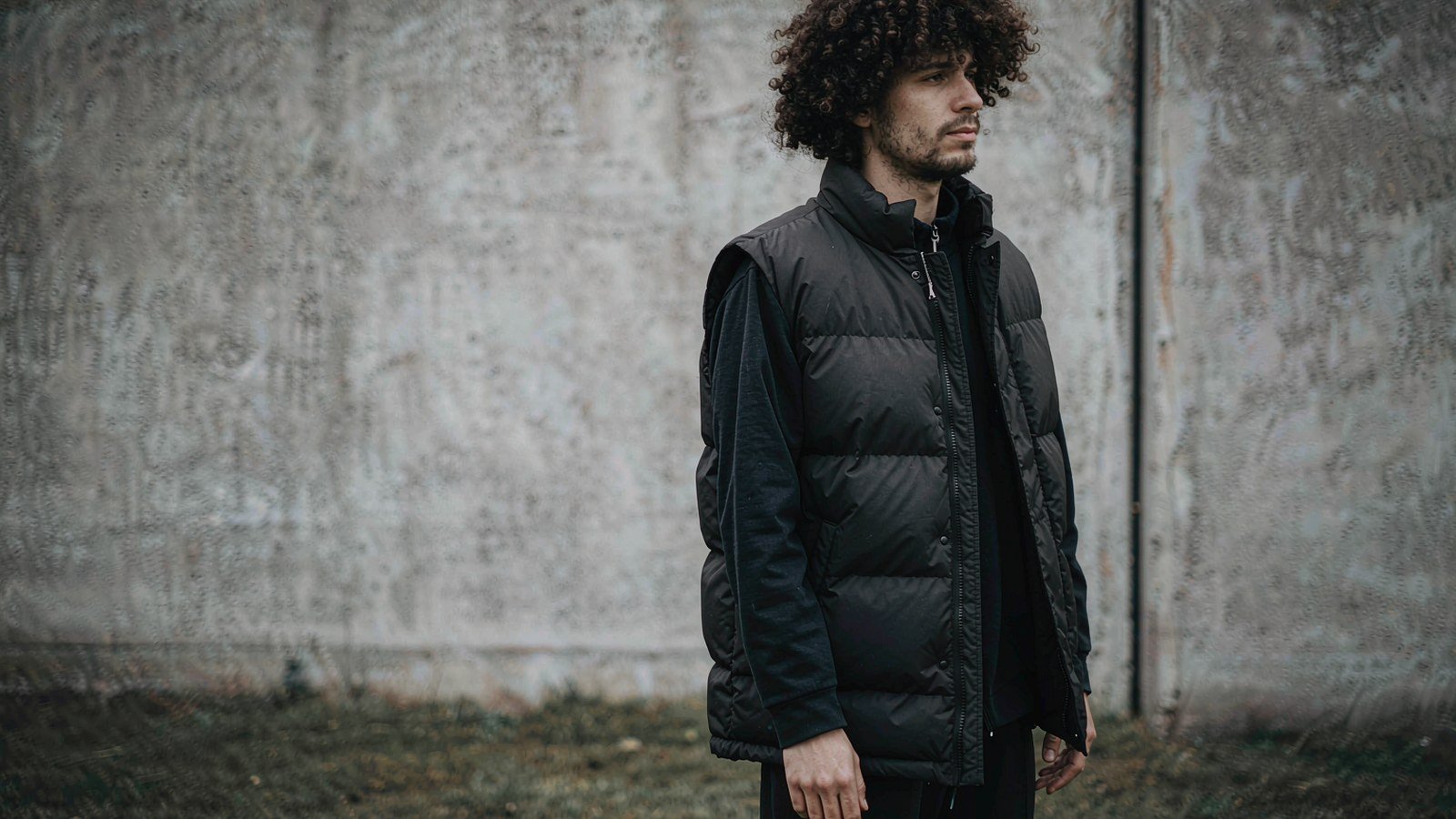
The short version: true to size for most builds; go one size up only if you plan to layer a hoodie underneath.
How jacket sizing carries over to the vests
Canada Goose builds its sleeveless pieces on the same size grid as the jackets. A Langford, Chateau, or Wyndham parka in size L and a vest in size L share the same chest block and overall length expectations. The armhole is drafted slightly deeper on a vest so it moves freely over shirts, but the numbers on the label mean the same thing across both categories.
That matters because most buyers already know their jacket size. If a MacMillan parka fits you well in medium, the medium vest will sit where you expect: hitting around the hip, snug enough to trap warm air without pulling across the chest. Start from your jacket size and adjust only for layering.
Using the replica Canada Goose puffer jacket size chart for vests
The chart you check before ordering should always be the one on the product page — sellers update their measurements per batch, and a chart copied from an old listing can run an inch off. What you can rely on is the logic behind it:
- Chest width is measured flat, armpit to armpit, then doubled for the full circumference.
- Body length runs from the top of the shoulder seam straight down to the hem.
- Shoulder span is seam to seam across the back.
On our vests, a size M typically measures 22–23 inches across the chest flat, with a body length around 26 inches. A size L adds roughly one inch in each direction. These are guidance ranges, not factory spec sheets — confirm the exact numbers against the size chart on the product page before you pay.
Key measurements and how to take them
Grab a soft tape measure and wear a light shirt. Measure twice; the second pass catches the tape slipping.
| What to measure | How to take it | Why it matters |
|---|---|---|
| Chest | Wrap the tape under the arms, around the fullest part, keeping it level | Decides whether the vest closes without straining |
| Shoulder | Measure seam to seam across the back of a well-fitting shirt | A vest cut too wide in the shoulder shifts and looks sloppy |
| Body length | From the high point of the shoulder straight down to the hem | Determines whether the vest covers the hip or rides at the waist |
| Armhole | From the shoulder seam down to where a sleeve would end | A deep armhole is normal on a vest; an enormous one means you sized up twice |
Chest is the number that actually decides fit. A vest with two inches of ease over your chest measurement sits comfortably; anything beyond four inches starts to look borrowed.
Boxy vs tapered: reading the cut
Not every vest in the range is cut the same way. Boxy styles — the ones modeled on utility and workwear shapes — run straight from chest to hem. Tapered styles pull in at the waist by an inch to an inch and a half. Neither is wrong; they suit different outfits.
Check the product photos for two signals. If the vest hangs in a straight vertical line from the armpits, it is a boxy cut and your regular size will look relaxed. If the side seams angle inward toward the hem, it is tapered and you can stay true to size even with a shirt underneath.
Between sizes? Do this
Falling between sizes happens most often at the chest, and the answer depends on what goes under the vest.
- Indoor wear over a t-shirt or button-down: take the smaller size. A down vest is meant to close with light contact, not drape.
- Layering over a hoodie or knit sweater: take the larger size. A medium vest over a heavy hoodie will pull across the back and gap at the zipper.
One pattern we see repeatedly: buyers who sized up “for winter” ended up with a vest that shifted sideways with every step, because down fill needs a close shell to stay put. Size for the thickest layer you wear on a normal day.
Washing, shrinkage, and how the fill settles
Down does not shrink the way cotton does, but the shell fabric and stitching can tighten slightly after a hot wash. Wash cold on a gentle cycle, tumble dry low with two or three dryer balls, and the shell will hold its measurements. Line drying flattens the fill and makes the vest read half a size looser than it did when lofted — another reason not to size up speculatively.
Loft also settles with wear. A vest straight out of the bag looks puffier than the same vest after two weeks of daily use. Zip it, move your arms, and let the fill redistribute before judging the fit.
Fit by body type
- Broad chest, narrower waist: boxy cuts flatter without tailoring. Tapered cuts may pull at the chest even when the numbers match, so consider the next size up.
- Slim build: tapered cuts keep a down vest from looking like a sleeping bag. In boxy styles, sizing down works if you layer lightly.
- Taller frames (6’2″ and above): check body length before chest. A standard vest hits at the waist on a tall frame; if you want hip coverage, look at the longer cuts in the range.
- Shorter torsos: a long vest shortens your legs visually. Choose styles that end at or just below the belt line.
Where to buy
Our Canada Goose down vests sit in the $135 band, well under $150, and every listing carries its own measured size chart:
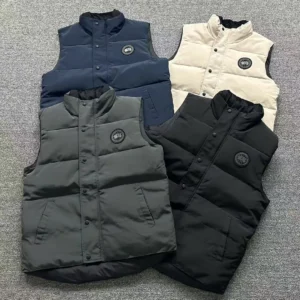 Canada Goose Black Boxy Down Vest$135View product
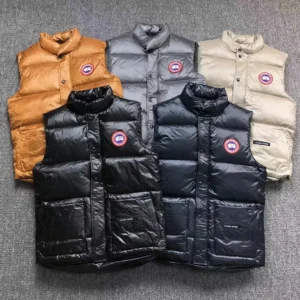 Canada Goose Black Glossy Down Vest E$135View product
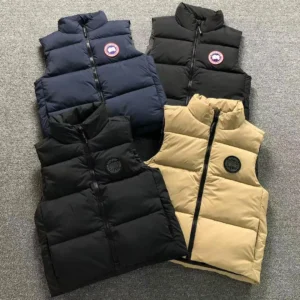 Canada Goose Black Label puffer vest$135View product
Canada Goose down vests in stock, all in the $135 band
browse every Canada Goose down vest
If you are also weighing a full jacket for deep winter, one page covers parkas, bombers, and the vests above in one place.
see the full Canada Goose range
Two of our guides pair well with this one: the replica Canada Goose long puffer buying guide walks through construction checks for the long parkas, and our Moose Knuckles vs Canada Goose bomber comparison covers the shorter side of the range.
Final checks before you order
Run through this list at checkout and the replica Canada Goose puffer jacket size chart will do its job: measure your chest flat, match it against the product page chart, settle your layering plan, then pick between sizes. Most buyers land on their usual jacket size; heavy layerers and broad-chested builds should go up one.
Order mid-week if you can — sizing questions get answered faster, and you will not be left guessing while a batch sells through.
FAQ
Do replica Canada Goose vests fit the same as the jackets?
For most people, yes. The vests share the jacket size grid, so your usual jacket size is the right starting point. Only deep layering or a broad chest changes the answer.
How do I measure my chest for a down vest?
Wrap a soft tape under your arms and around the fullest part of your chest, keeping it level. Note the number, then plan for two to four inches of ease. Compare that total to the flat chest width on the product page chart, doubled.
Should I size up to layer a hoodie under my vest?
Take one size up if the hoodie is heavyweight. A thin long-sleeve shirt fits fine under your regular size. If you only layer a few weeks a year, buy for the majority of your wear.
How long should a Canada Goose vest be?
Most hit around the hip, roughly 26 inches of body length in the middle sizes. Taller buyers should check length first, since a standard vest can ride at the waist above 6’2″.
Do down vests shrink after washing?
The shell may tighten slightly after a hot wash, but cold washing and low tumble drying keep the original measurements. The bigger change is loft: flattened fill makes the vest fit looser, not tighter.
What if I’m between sizes on the chart?
Decide by your base layer. T-shirt wearers take the smaller size; hoodie wearers take the larger. When you are genuinely split, the larger size is safer for a vest, because a too-small one cannot be layered over anything at all.