
Most puffer jackets get one good season and then quietly disappear. The North Face’s 1996 Nuptse has been on the street for three decades and shows no sign of slowing down. You will see the same silhouette on a Brooklyn skateboarder at noon and on a Hokkaido ski lift the same afternoon, in nine different colourways, at nine different price points.
Part of that is the shape. Part of it is the history. Some of it is plain inertia: once a jacket lands in hip-hop videos, prep school hallways and Supreme lookbooks, people keep wearing it. Here is what actually makes the 1996 Nuptse work, what the 1996 update changed, and how to decide between the ’96, the ’92 and the regional editions.
A jacket born on a mountain, not in a boardroom
Start with the name. Nuptse is Tibetan for “west peak” — a 7,861 m (25,791 ft) mountain sitting roughly 2 km southwest of Everest in Nepal’s Khumbu region. It was first climbed on 16 May 1961 by Dennis Davis and Sherpa Tashi. It is not a very independent peak, but it makes for a serious jacket name.
The product’s origin story goes back to 1987, when Sally McCoy, then The North Face’s Director of Equipment, joined the Snowbird Everest Expedition. That trip pushed the brand toward naming outerwear after the peaks and glaciers around Everest. Five years later, in 1992, the first Nuptse Jacket arrived as part of the brand’s Expedition System, designed by Ingrid Harshbarger.
Its actual innovation was construction, not fashion. The Nuptse used horizontal baffles to hold the down in place instead of letting it slide toward the hem, which meant more warmth for less weight. The cut stopped at the waist so a climbing harness stayed accessible. That is the whole brief.
What actually changed in 1996
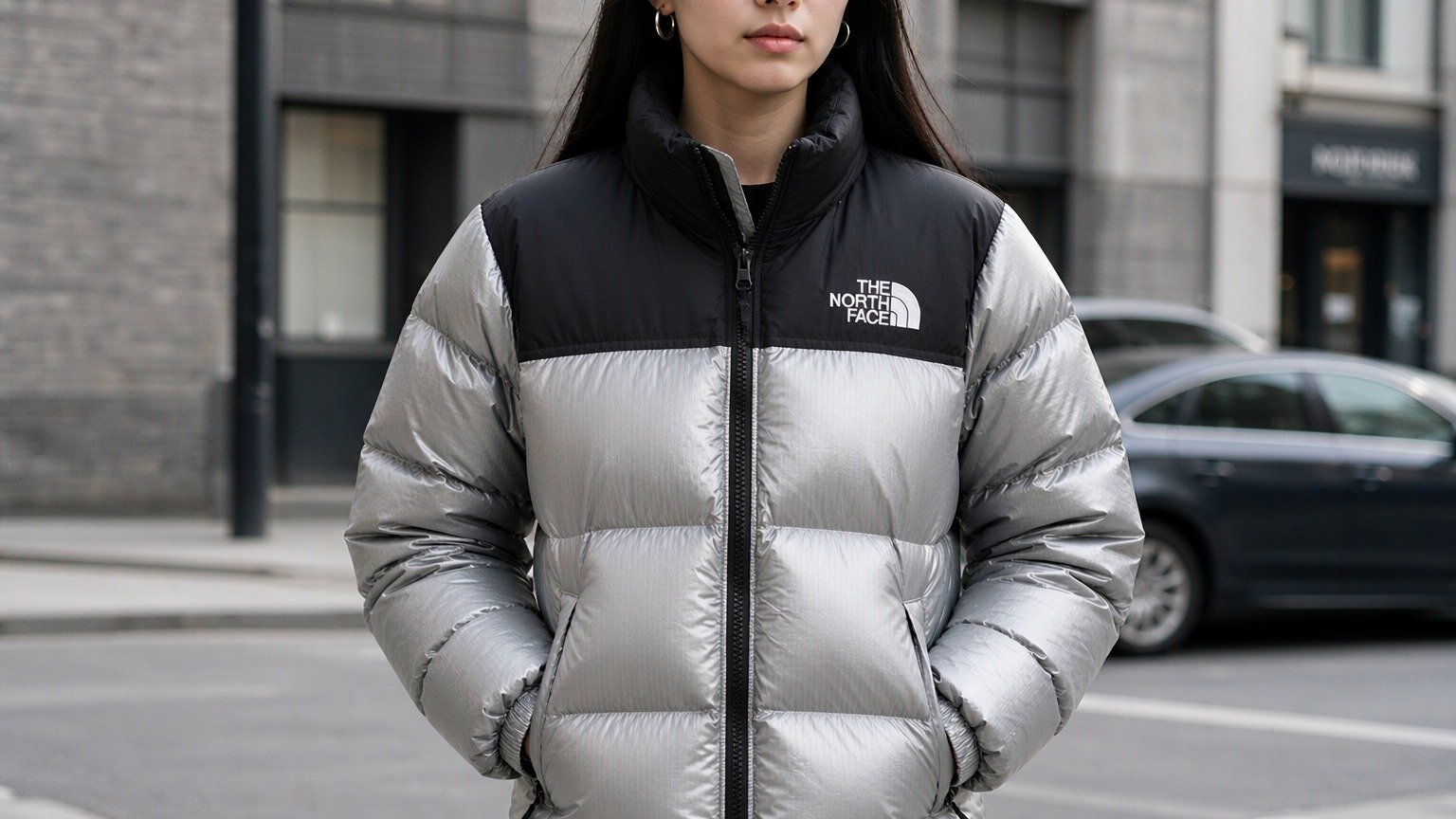
The ’96 version was not a redesign. It was a nudge — updated to follow the jacket trends of the moment while protecting the silhouette people already recognised. The most visible change was that the baffles grew. That is why the ’96 looks puffier and more graphic than the original, almost like a quilted block of colour rather than a jacket.
The body also went boxier and shorter, and the embroidered logo moved to the left chest and back-right shoulder. Those three edits, made in 1996, are the reason the jacket reads as an icon now rather than a piece of 1990s expedition gear.
1996 vs 1992 in one line each
The 1992 is slimmer and longer, with the logo sewn on the sleeve. The 1996 is wider, shorter and louder, with logos embroidered front and back. If you want the quiet version, you want the ’92. If you want the one everyone recognises on sight, that is the ’96 — and it has been the standard model in Japan for years for exactly that reason.
The spec sheet, read honestly
Here is what the current 1996 Retro Nuptse (style NF0A3C8D) actually is, straight from the brand’s own published specs:
- Insulation: 700 fill recycled waterfowl down. Since 2016, all down used across the Nuptse line has been Responsible Down Standard certified.
- Shell: 40D 57 g/m² recycled nylon ripstop with a non-PFC DWR finish, plus 50D 69 g/m² recycled nylon taffeta on the collar, yoke and lining.
- Weight and length: around 775 g (1 lb 11.3 oz) for the men’s version and 685 g for the women’s, with 26 in and 23.75 in centre-back lengths respectively.
- Details: oversize baffles, a stowable three-piece hood that packs into the collar, an exposed VISLON centre zip, secure-zip hand pockets, an internal hem cinch, and the whole jacket stuffs into its own right-hand pocket.
- Retail: $380 in the US.
Two honest caveats, because most reviews skip them. The DWR finish repels water, but there is no waterproof membrane — in sustained rain the shell wets out and the down loses loft. And The North Face does not publish a fill weight or a temperature rating for this jacket, so anyone quoting you “good to −20°C” is improvising. At 700 fill it is mid-tier by modern standards; it earns its warmth through volume of down rather than exotic engineering. That is fine. It is a city and resort jacket, not a summit jacket, and the brand’s own warmth rating says the same thing.
Why it refuses to go away
The Nuptse landed in New York at exactly the right moment. Bold colourways, a simple shape, a visible logo — it caught on with school kids and rappers through the 1990s and never fully left. Supreme’s take on the Nuptse in 2011 was the first brand collaboration to use the model, and there have been plenty since: Gucci in 2020, KAWS in 2022, Maison Margiela’s MM6 line in between. In the last quarter of 2018 the Nuptse ranked as the second-hottest men’s product on Lyst’s global index, behind only a Nike Air Force 1.
The brand has also kept updating the jacket rather than freezing it. The ’96 re-release in 2017 pushed the design back toward its origins. 2019 brought the first fully recycled Nuptse. 2022 marked 30 years of the line with a stitch-for-stitch replica of the original ’92. Meanwhile the price has crept from roughly $250 a decade ago to $380 today, which is a reasonable argument for looking at last season’s colourways, the second-hand market, or a catalog that keeps the silhouette without the boutique markup.
Which version should you actually get?
There is not one Nuptse — the regional lines change fabrics and prints, and the resale market prices them differently.
- The 1996 Retro Nuptse in its standard colourways is the reference point. Boxy, loud, immediate — buy this if you want the jacket people picture when you say “Nuptse”.
- White Label is The North Face’s Korea-only line. Same silhouette DNA, different fabrics and novelty prints, which makes the White Label Novelty Nuptse the version you will not see on five other people on the same block.
- Urban Exploration is the Japanese equivalent: quieter, more technical, occasionally better built.
- The ’92 30th Anniversary jacket is for anyone who prefers the longer, slimmer cut with the sleeve logo.
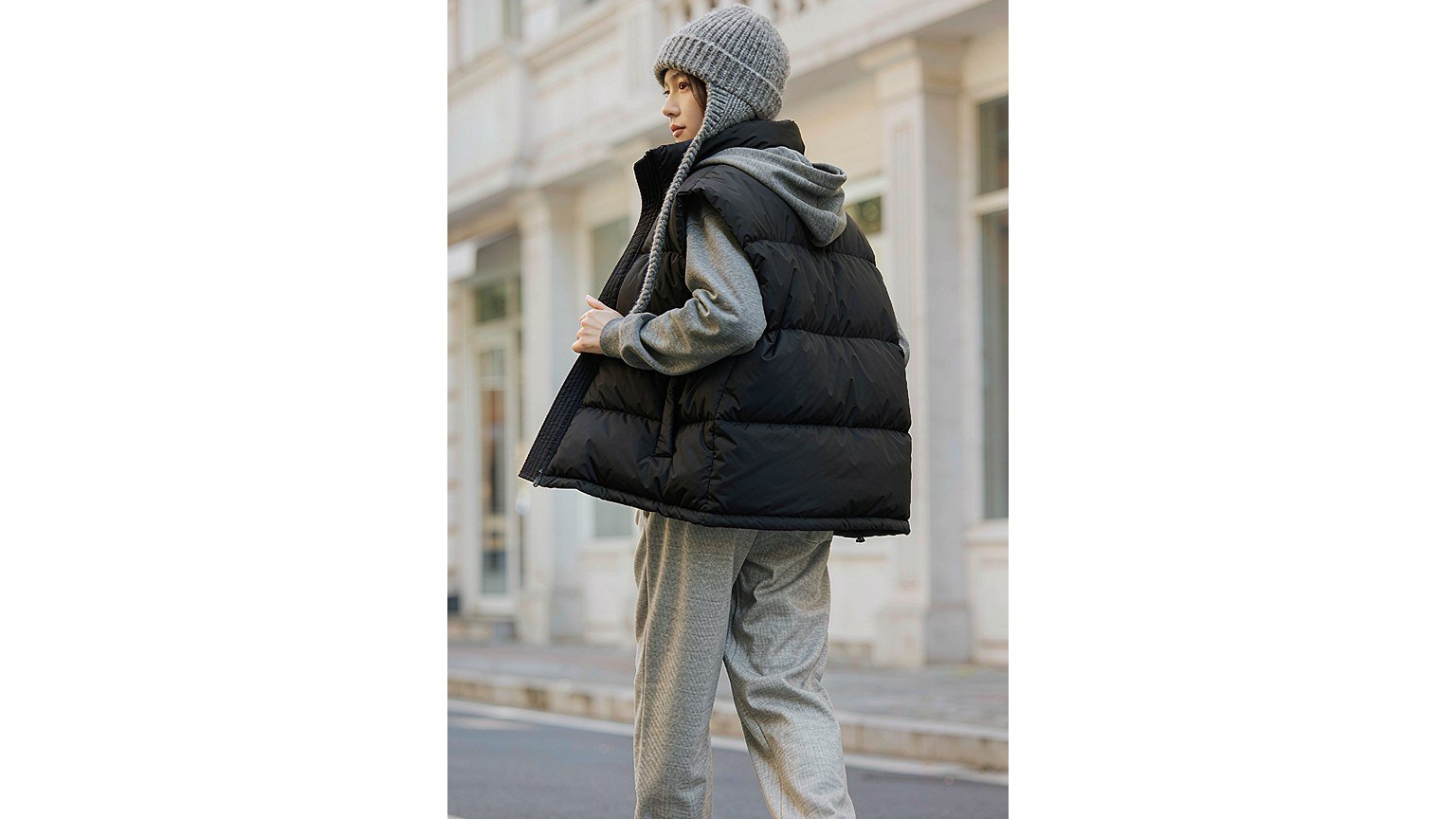
- If you want the same look at full length, the Nuptse line also runs to a hooded long parka and a cropped version — worth knowing before you commit to the classic.
Size and fit
The 1996 is a relaxed, boxy fit by design. That is the point of the jacket, not a sizing failure. If you are between sizes and want to layer a hoodie underneath, take the larger one. If you want the 1990s look the way it was worn in New York, take your normal size and accept a little room in the shoulders. The women’s version is noticeably shorter in the body — 23.75 in centre back against the men’s 26 in — and uses partly elasticated cuffs with hook-and-loop tabs rather than the men’s fully elasticated design.
FAQ
Is the 1996 Nuptse warm enough for real winter?
For city winters and resort skiing, yes. 700 fill down behind oversize baffles handles dry cold well. For wet coastal winters or long stretches outdoors well below freezing, you will want a shell over it or a heavier parka.
Does The North Face still make the Nuptse?
Yes. It is still a permanent line item as the 1996 Retro Nuptse, and it remains one of the brand’s best sellers. The wider Nuptse collection has grown past 60 separate items since the jacket first launched.
Can you wash a Nuptse?
Yes — down-safe detergent, gentle cycle, then tumble dry on low with dryer balls or tennis balls to break up the clumps. Skip dry cleaning and skip fabric softener; both strip the natural oils that give down its loft.
How do I tell a 1992 from a 1996?
Check logo placement and length. Sleeve logo with a longer, slimmer body means ’92. Embroidered chest and back-shoulder logos on a shorter, boxier body means ’96.
Bottom line
The 1996 Nuptse survived three decades because it does one job well and looks like itself while doing it. It is not the warmest jacket you can buy and it is not trying to be. It is the one you reach for from November through March without thinking about it, in a shape that has been read as cool by three consecutive generations.
If you want to see how the whole range lays out — the ’92 and ’96 cuts, the cropped versions, the vests, the long parkas and the regional labels — start with our North Face puffer jackets collection, or browse everything filed under The North Face for the rest of the line.



Comment (1)