

Not long ago, wearing a waterproof shell with taped seams and a bulky hood to a coffee shop meant one thing: you had somewhere better to be. Now it usually means you got dressed on purpose. Technical jackets built for weather rather than compliments are everywhere in cities now, and the trend has a name that has survived almost a decade: gorpcore.
Here is where the word came from, why technical jackets crossed into everyday wardrobes, what happened when luxury noticed, and how to wear the look in 2026 without looking like you are about to summit something.
Where the Word Came From (And Why It Stuck)
The writer Jason Chen coined “gorpcore” in May 2017 in The Cut, in a piece titled “First Came Normcore. Now Get Ready for Gorpcore.” Gorp is hiker slang for trail mix, usually expanded to “good old raisins and peanuts,” and the -core ending came from normcore, the earlier trend of dressing deliberately plain. The tone was half-joking: Chen described the fleeces, ponchos and parkas as “defiantly ugly” – worn precisely because they refused to be fashionable.
What started as irony got serious fast. A$AP Rocky wore hiking fleece with designer bags, Frank Ocean turned up in Arc’teryx, Drake performed in Stone Island windbreakers. Then TikTok found the word in the early 2020s, the pandemic pushed everyone outdoors, and gorpcore stopped being a punchline. Dressing for weather you will not actually encounter started to look more honest than dressing for a dress code nobody believes in.
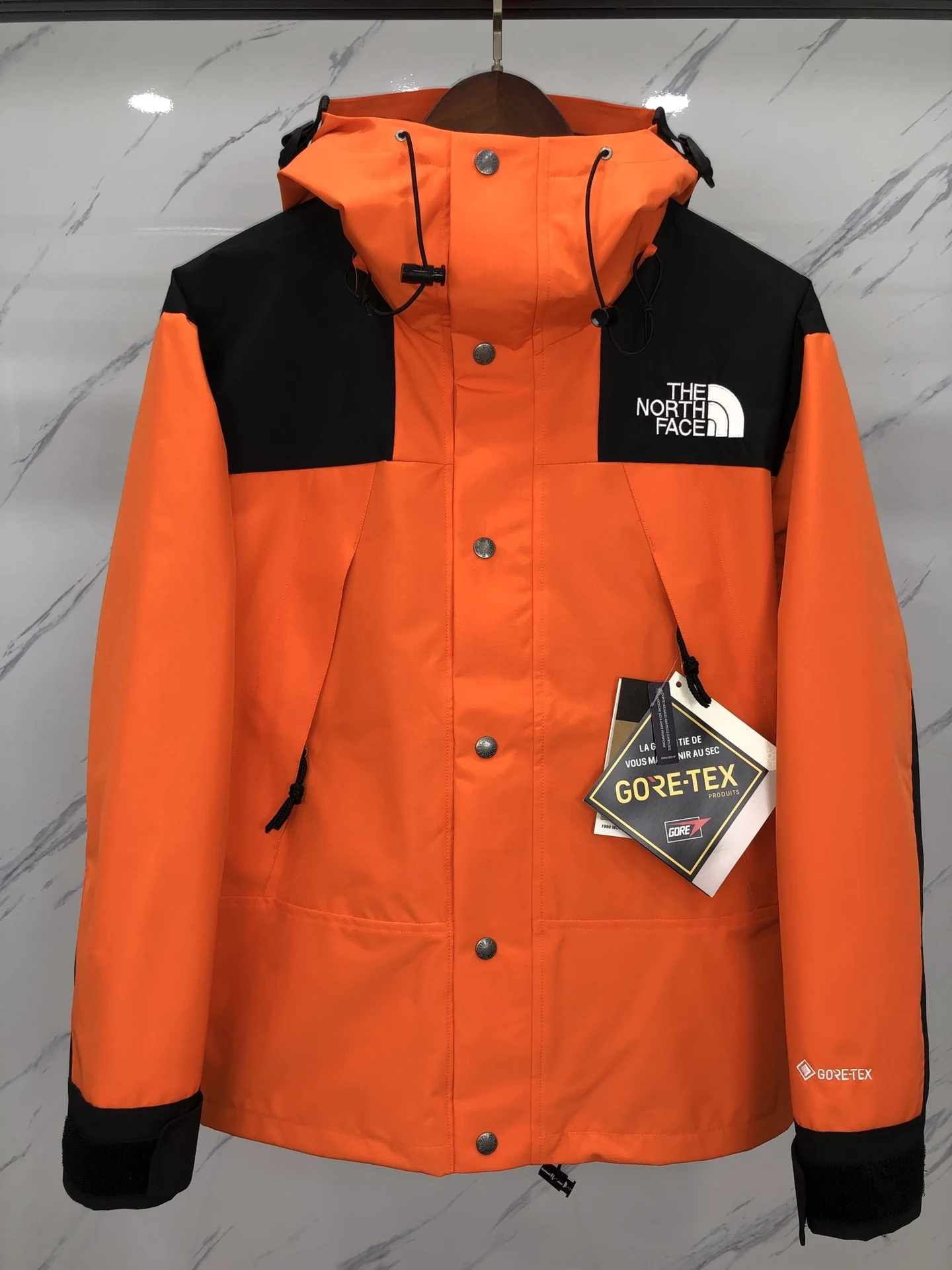
The silhouette that did most of the early work is still the clearest example – a mountain cut, loud colour, storm flap closed, zero apology.
The Gear Actually Earns Its Keep
Part of why technical jackets took over is that they are not faking anything. A real shell is a small engineering project: a waterproof-breathable membrane, taped seams, storm flaps over the zips, a hood that stays on in wind. A down puffer is the same story in soft form – fill power, baffle layout and fabric denier all solve specific problems, which is why they read as design rather than decoration.
Look at the current Arc’teryx Beta AR, the shell half of this trend gets built around. The 2026 version uses a three-layer GORE-TEX PRO fabric with the newer ePE membrane, which drops the intentionally-added PFAS chemicals older membranes relied on. Tougher panels run across the shoulders and upper arms, where pack straps chew fabric; lighter panels sit through the body; the whole thing lands around 460 grams with a RECCO avalanche reflector sewn in. None of that is styling – it is a list of decisions made for people who climb in bad weather, and it is exactly the credibility that made the rest of the world want one. You do not need that exact jacket either: a hooded technical down jacket from the Arc’teryx line speaks the same language in insulated form.
That credibility travels. An olive technical ski jacket in the Prada mould works in a city for the same reason the Beta AR works on a ridge: everything on it is there for a reason, and you can feel it.
Then Luxury Showed Up
The moment the trend stopped being subculture was the moment luxury houses started phoning outdoor brands. In January 2021, Gucci and The North Face launched a joint collection – Gucci’s first full collaboration with another brand, and the first time The North Face had partnered with a luxury house. It went past clothing into tents and sleeping bags, with luggage made from ECONYL, a nylon regenerated from waste like fishing nets. That November, Jil Sander+ followed with an Arc’teryx capsule built around ski and snowboard pieces.
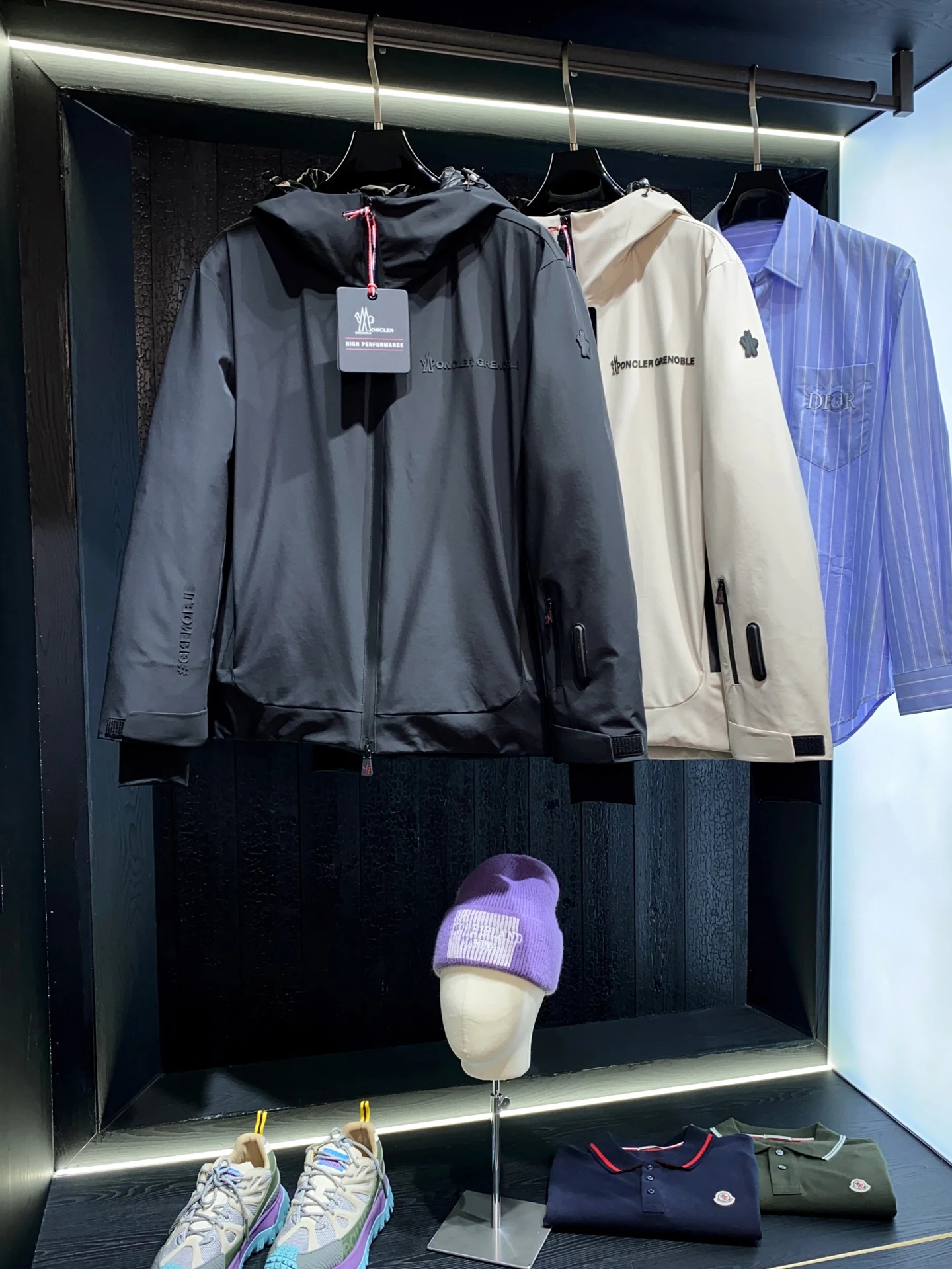
Moncler, fittingly, had been there all along. The company started in 1952 making quilted sleeping bags and anoraks for mountain workers, and its Grenoble line has run for years as a genuine performance-ski range – proper layering systems of shell, mid and base layers, and real GORE-TEX ski shells like the Moncler Grenoble Staz that are rated for actual resort days, not just resort photos. In January 2026 the brand showed its Fall/Winter 2026 Grenoble collection on a snow-covered runway in Aspen and opened its first US flagship store there, which tells you how central the mountain-luxury idea has become.
The money backs it up. Amer Sports, the group behind Arc’teryx and Salomon, closed 2025 with $6.57 billion in revenue, up 27 percent – and the technical apparel division built around Arc’teryx grew 30 percent to $2.86 billion, roughly 43 percent of the group. Moncler Group finished 2025 at about €3.1 billion; The North Face posted roughly $4 billion for its last fiscal year. Technical outerwear is no longer a niche next to fashion – in growth terms it is one of the biggest things happening inside it. The customer keeps widening too: Arc’teryx’s fastest-growing category in late 2025 was women’s, up more than 40 percent in the fourth quarter, and the full Arc’teryx range now runs from alpine shells to city-length puffers. Whatever gorpcore started as, the people buying it are not all planning to climb anything.
The 2026 Version Is Quieter
The first wave of the trend was loud on purpose: high-visibility shells, straps everywhere, logos doing the talking. The 2026 version has calmed down. Earth tones – stone, moss, slate, sand – replaced safety orange. Matte fabrics replaced high-shine nylon. Zips got hidden, and branding shrank to a small chest patch. Same engineering underneath, minus the costume.
You can see the shift in the products themselves. Moncler Grenoble’s FW26 collection in Aspen leaned on waxed cotton, shearling and a palette pulled from the Colorado landscape – mountain clothing meant to read as tailoring’s relaxed cousin. Arc’teryx’s move to the ePE membrane made its shells less stiff and less shiny as a side effect, which happens to suit the moment. A technical jacket no longer announces itself across the street, which is exactly why it now passes in an office lobby. The multi-pocket hooded pieces from Prada’s Re-Nylon project sit right in this space – utility detailing you can wear to dinner.

How to Wear It Without Looking Like You’re Heading to Base Camp
A few habits separate gorpcore from actually being lost in the woods:
- One technical piece per outfit. A shell or a puffer carries the look; the rest of the outfit stays quiet.
- Stay in earth tones. Olive, stone, slate and black mix with everything. If you want one bright accent, make it one.
- Layer with intent. A fleece or a light down vest under a shell is the core formula – and it is warmer than one thick coat.
- Do not size down. Shells are cut to fit over mid-layers. A tight technical jacket defeats its own point.
- Balance the volume below. Relaxed trousers and chunky trail-style shoes keep the silhouette from looking top-heavy.
Gorpcore Questions, Answered
What does “gorpcore” actually mean?
It is a fashion term for wearing technical outdoor gear as everyday streetwear. Jason Chen coined it in The Cut in 2017, combining “gorp” – hiker slang for trail mix – with the -core ending from normcore.
Is gorpcore still in style in 2026?
Yes, but it has matured. The trend has moved from ironic, neon-heavy looks toward quieter earth-tone styling, and the market behind it keeps growing – Arc’teryx’s parent company grew technical apparel sales 30 percent in 2025 alone.
Can I wear a ski jacket around town?
Absolutely – that is the core of the trend. A waterproof ski shell with taped seams is overqualified for a rainy commute, which is precisely the appeal. Keep the rest of the outfit simple so the jacket reads as a choice, not a costume.
Do I have to spend Arc’teryx money to pull it off?
No. The look depends on silhouette and fabric, not the label. A matte shell or a clean down puffer with a real hood gets you most of the way there; what matters is that the piece looks engineered rather than decorated.
If the trend has proved anything in nine years, it is that jackets built for weather never really go out of it. Have a look through the puffer jackets collection and pick the piece that matches your winter – city or otherwise.